

Quick summary
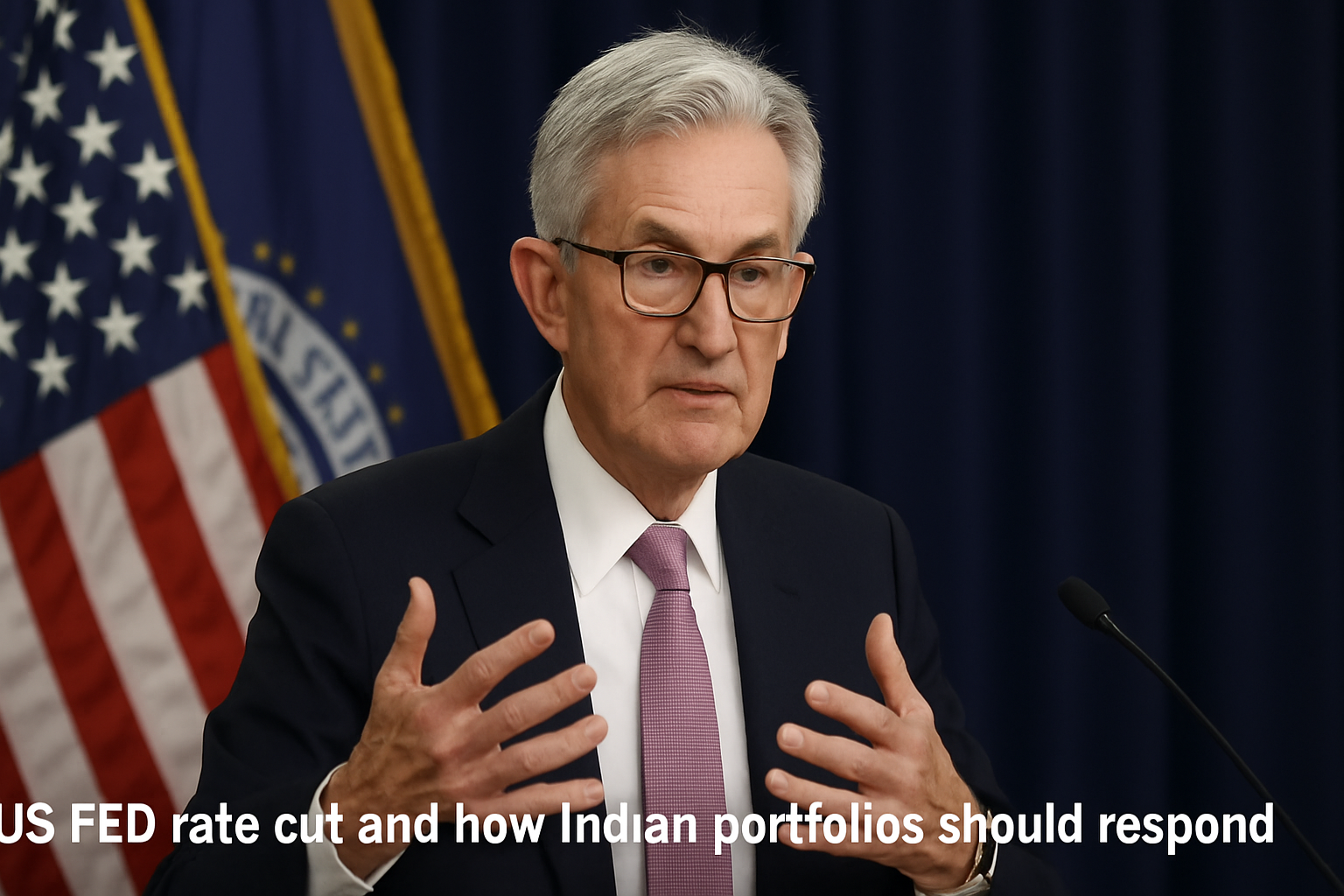
The US Federal Reserve cut the policy rate by 25 basis points to a 4.00–4.25% target range on 17 September 2025 as a measured, risk-management move. Markets reacted with a mix of relief and caution. In India, equity benchmarks moved higher on the news with clear leadership from export-sensitive sectors and defensive inflows into gold. Key portfolio implications are a near-term window for selective risk taking, a need to rebalance duration in debt holdings, and a renewed emphasis on quality and earnings resilience. US FED Rate Cut
US FED rate cut: what happened
The Fed delivered a 25 bps cut and signalled two more cuts this year while emphasising caution because inflation remains elevated and the labour market is weakening. The policy move was framed as risk management, not an open-ended easing cycle, and officials left ambiguity about the pace of future cuts. The 10-year US Treasury yield actually rose on the day as investors parsed the Fed’s cautious guidance.
US FED rate cut and Indian market reaction
India’s market responded positively on 18 September 2025. The Nifty 50 rose 0.37% to 25,423.60 and the BSE Sensex gained 0.39% to 83,013.96, closing at 10-week highs. IT and pharmaceutical indices led gains with CNX IT up about 0.8% and CNX Pharma up 1.5%. Twelve of the 16 major sectors recorded gains and both mid-caps and small-caps ticked up modestly. The rally reflected a mix of hopes for renewed foreign flows and easing of trade tensions.
Gold and safe-haven assets were also bid. International gold spiked to record levels near US$3,707 per ounce on the move and continues to act as a hedge against policy uncertainty and sticky inflation. Domestic gold prices typically track this global move closely after accounting for the rupee and taxes.
Why this matters for Indian investors
The US FED rate cut matters for India for three practical reasons:
• Flows: Lower US yields reduce returns on US fixed income and can make emerging market equities relatively more attractive to global funds. Analysts see the potential for renewed FII interest in India if global liquidity conditions remain supportive.
• Currency and inflation: A softer dollar can ease import costs and help the rupee. That reduces imported inflation pressure, particularly on crude-linked items, and is positive for real consumption trends.
• Sector effects: Export-oriented sectors with sizable US revenues benefit from a softer dollar environment and improved global risk appetite. At the same time, gold and defensive fixed income remain relevant as portfolio hedges.
Key sectors to watch now
These are the sectors that showed immediate reaction and deserve monitoring over the next 3–6 months:
- Information Technology: clear short-term beneficiary because a meaningful portion of revenues are dollar-linked and a softer dollar with better global liquidity improves demand visibility. CNX IT led gains on the day.
- Pharmaceuticals: benefits from US demand and regulatory developments; Biocon and Natco were notable outperformers. Watch companies with strong US approvals or pipeline clarity.
- Metals and commodities: risk-on flows and prospects of easier global financing are supportive. Metals often outperform in cycles of renewed liquidity and easing global rates. Commentary in the file flagged metals as near-term beneficiaries.
- Financials: banks, NBFCs and insurers will be sensitive to any spillover into domestic yields and credit growth. Lower global rates can ease funding pressures, but domestic fundamentals and NIMs matter most.
- Gold and defensive assets: price action shows elevated investor demand for gold as an insurance asset. Keep a tactical allocation depending on risk tolerance.
- High-quality corporate bonds: if FIIs increase allocation to India and local yields compress, good quality credit benefits. That said, monitor duration and reinvestment risk.
Practical portfolio actions for Indian investors
Use these as a disciplined checklist rather than investment orders. Tailor to your risk profile and investment horizon.
- Rebalance to quality equities
- Trim positions in leveraged cyclical names that are vulnerable to local macro swings.
- Add or hold high-quality IT and pharma names with clear US revenue links and healthy earnings visibility. Evidence from the market shows these sectors led the move on 18 September.
- Add a measured gold hedge
- For investors worried about policy uncertainty and sticky inflation, a tactical allocation to gold ETFs or sovereign gold bonds makes sense. Global gold reached new highs on the Fed move, and domestic prices follow.
- Re-examine debt duration
- If you hold long-duration bonds, assess reinvestment risk versus mark-to-market gains. A modest shortening of duration or laddering can protect against a reversal if inflation surprises again. Analysts in your materials highlight that bond markets reacted variably to the Fed’s messaging.
- Watch the rupee and currency exposure
- Exporters gain from a stable or stronger rupee when it comes from lower imported inflation. For foreign holdings, consider currency hedges if you expect volatile dollar moves. Expert commentary shows the rupee could strengthen on lower dollar yields.
- Keep an eye on FII flows but avoid timing the market
- The Fed move can trigger stop-start inflows; history shows these flows can reverse quickly. Use inflows as an opportunity to rebalance rather than chase momentum. Analysts cited that India may attract more flows but medium-term returns depend on domestic earnings.
- Maintain emergency liquidity
- Volatility spikes remain possible given uncertain inflation prints and geopolitical risks. Keep cash or liquid funds to exploit pullbacks.
Tactical watchlist (what to monitor day to day)
• US CPI and payrolls data: these will shape the Fed’s next steps and global yields.
• India’s macro prints and Q2 corporate earnings, Market gains must be supported by domestic earnings improvement to be sustainable.
• FII flow reports and SDL auction calendar: supply and demand in the bond market will influence domestic yields and banking sector margins.
Final thoughts
The US FED rate cut is catalytic but not decisive for Indian investors. It opens a tactical window for selective equity exposure, supports a case for gold as hedge, and prompts a careful reassessment of duration in fixed income. Above all, domestic fundamentals and earnings trends will determine whether the move becomes a sustained tailwind or a short-lived sentiment event. Investors who keep allocations diversified, focus on quality businesses, and manage duration and currency risks will be best positioned to benefit.
As we analyze the US FED rate cut and its impact on Indian portfolios, don’t miss our last deep dive on why the smart money is tracking a hidden Pre IPO opportunity. Read it here.
With the US FED rate cut shaping global flows, staying updated matters more than ever. Join our exclusive WhatsApp investor community for timely insights and portfolio strategies. Join the club.
1 comment on “US FED rate cut and how Indian portfolios should respond”